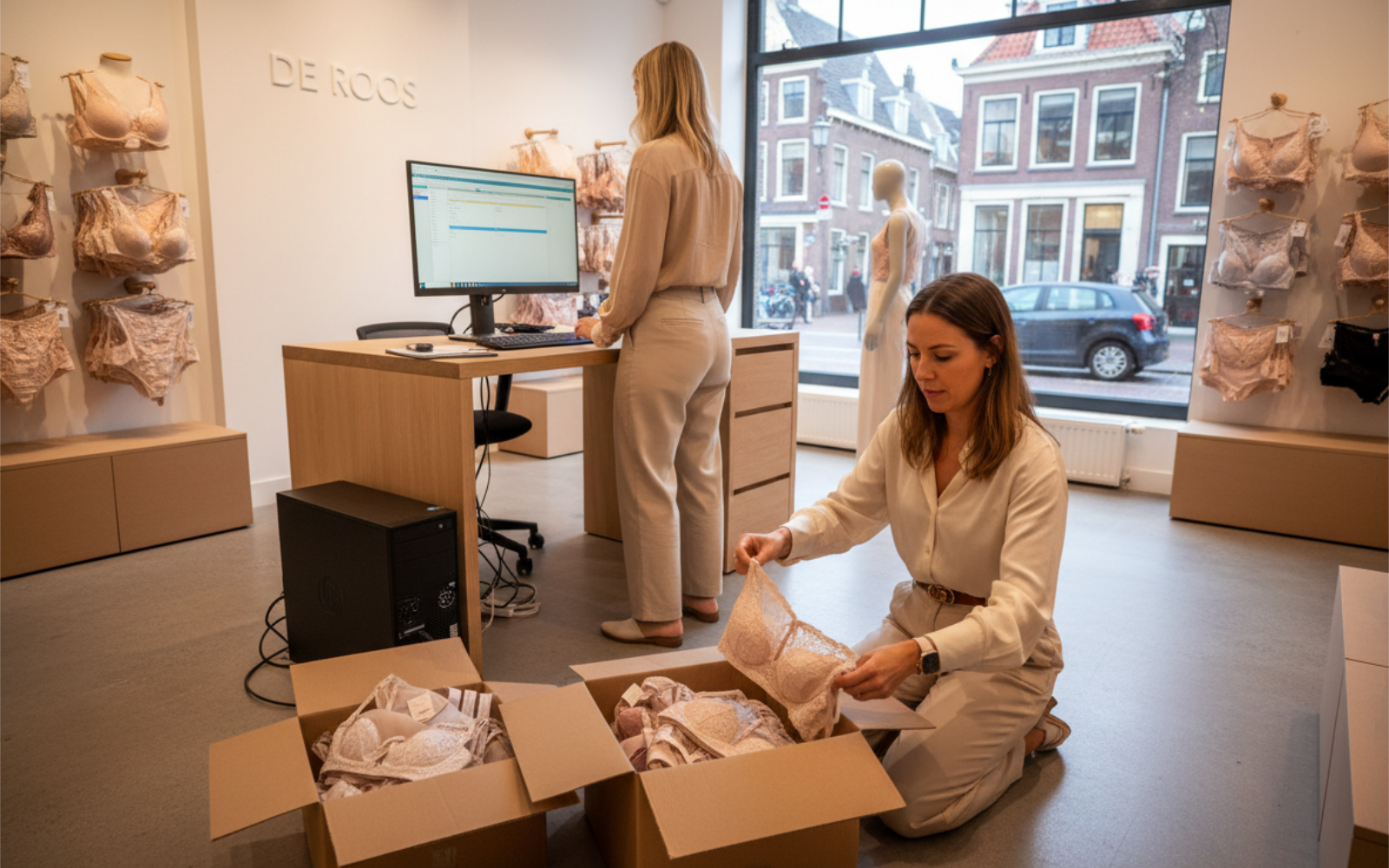
A POS system can work technically excellent and still it feels to a retailer like something is missing. Items still need to be entered. Photos are missing. Colors deviate. Barcodes need to be checked. A new collection has arrived, but is not yet ready for sale.
The problem is often not in the software at all. Good article data for retail is frequently missing at the moment that information is needed.
That is why fashion data, article data for retail, and a good POS integration belong together. The integration ensures that systems can exchange information. However, the quality of what ultimately appears in the cash register, webshop, or other retail software is determined by the data flowing through that integration.
Only when both are correct does the promise become interesting: a collection that does not first need to be built manually, but can be checked and sold almost immediately.
Why retail item data gets stuck too often.
Fashion is more complex than just an article number and a retail price. A garment can consist of multiple colors, sizes, and variants. Add to that EAN codes, seasons, prices, descriptions, and product images. Moreover, all this data must be available at the right time.
When a single component is missing, the work shifts to the next party in the chain. The retailer looks for a photo. An employee adjusts a description. A barcode is checked again. A POS system supplier investigates why an item is not scanning properly. This creates manual work in a place where automation should actually be saving time.
Good retail item data doesn't prevent every problem, but it does ensure that the foundation is already in much better shape before reaching the shop floor.
That is also the role of Latest Collection as a central data layer. Brands supply article information, after which that data can be structured and made available to affiliated software partners and retailers.
Anyone who wants to view the complete flow can find it at How it works.
A POS integration is only as good as the data that flows through it.
With a POS integration, attention often goes first to the technology. Can system A and system B communicate with each other? What data is exchanged? How often does synchronization take place?
Those are important questions. But they only tell half the story. After all, a perfect technical connection can still transmit incomplete information.
If a brand has not provided a product image, the connection cannot invent that image. If a size is structured incorrectly, that error is only transmitted faster. And if an EAN code is missing, even a well-integrated POS system remains dependent on correction work.
Therefore, a cash register integration must be viewed in combination with article data for retail. The technology provides the connection. The product data determines what that connection is worth.
Why EDI is important in fashion, but doesn't tell the whole story.
EDI has been playing an important role in fashion for years. For order, delivery, and invoice flows, Electronic Data Interchange ensures that systems can exchange standardized messages. This results in speed, structure, and less manual processing. But not every fashion data stream starts as EDI.
Many brands still supply product information via Excel, CSV, exports, or other formats. That does not have to be a problem. It only becomes a problem when that data is not converted into a structure that other systems can use.
An order can therefore easily run via EDI, while the retail item data needed for the register or webshop is still being supplemented manually. Therein lies an important difference between messaging and product data.
EDI ensures that systems communicate. The data layer ensures that the information they communicate with is complete and usable. Exactly that combination is reflected in the partnership between FashionUnited eBusiness and Latest Collection: FashionUnited eBusiness handles the messaging, while Latest Collection converts product information and images into uniform article data that connected systems can use. See how this collaboration works in practice at FashionUnited eBusiness

What a POS integration does with product data for retail.
When product data is available centrally and flows to the point-of-sale system via a good integration, the process changes for multiple parties simultaneously.
For a retailer, this means less manual entry. Items do not need to be built from scratch when the required data is already available.
For brands, this means that the same information does not have to be prepared over and over again for each individual retailer.
For POS suppliers and resellers, the proposition becomes stronger. The POS system is not only technically ready for use; relevant product information can also be immediately available.
That is the difference between delivering software and actually getting a retailer up and running faster. Good product data for retail therefore makes the integration not only technically interesting, but above all practically valuable.
From entering to scanning, checking, and selling.
For a retailer, the benefit becomes most apparent when a new collection arrives. Without available retail item data, a series of manual tasks often begins there: creating the item, entering the description, checking the price, adding size and color, processing the barcode, and possibly searching for product images. When the information is already available, that process changes.
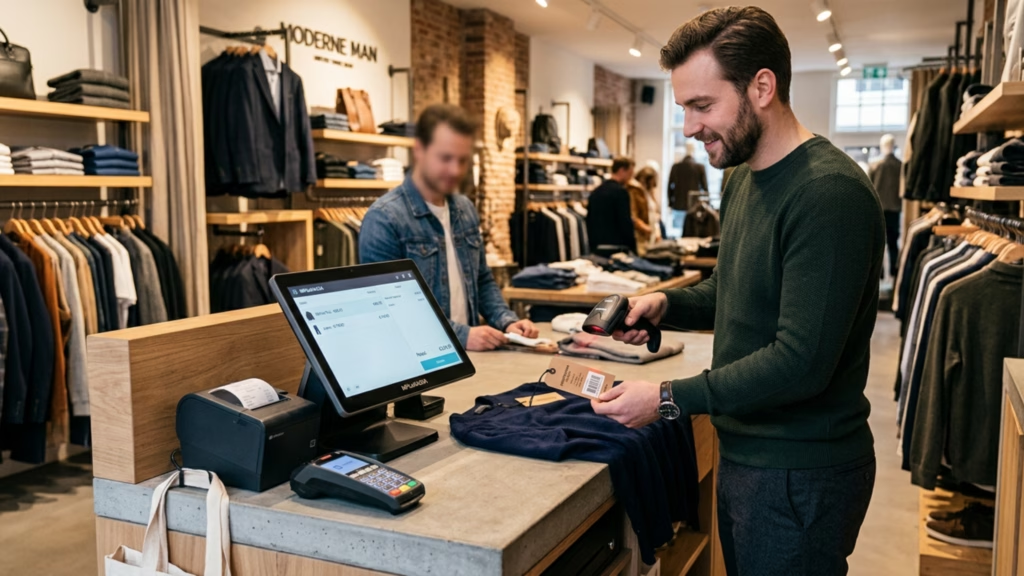
The retailer scans an item, checks the data, and can proceed. The difference seems small, but multiply a few minutes of data entry work by hundreds or thousands of items per season and the impact becomes significant.
That is why automation in fashion is not just about a fast checkout. It is also about preventing work before anyone even stands behind the register.
How software partners make item data available in practice.
The same data layer can be applied differently within various software environments.
At MplusKASSA, for example, the value comes together in the combination of POS software, webshop capabilities, and available product data. When product information, barcodes, and images are ready, a retailer has to build less from scratch.
At EasyPOS, the emphasis is likewise on available product information, without every data stream needing to depend on EDI. As soon as item data comes in consistently, the retailer can get back to daily operations more quickly.
FashionUnited eBusiness demonstrates precisely how EDI and supplementary data flows can coexist. EDI handles messaging, while supplementary item data ensures that brands supplying data in a different way can also be utilized within the supply chain.
At Retail2Market, the online sales channel also plays a major role. Complete product information and available images help get product feeds ready for sale more quickly.
Within LEZA (MplusKASSA) and ACA, the same principle applies once again: the value lies not only in the system itself, but in the moment when the required data is available.
The technique varies per partner. The basis remains the same: good article data for retail prevents every retailer from having to rebuild the same information.
Why available product images are just as important.
Furthermore, article data for retail consists of more than just text and barcodes. For webshops, omnichannel retail, and other digital sales channels, product images are an essential part of the article. When data is available but images are missing, a product may be technically present, but not yet fully ready for sale.
Therefore, article information and visual material are increasingly intertwined.
A central data structure makes it possible not only to recognize an EAN code, size, or color, but also to link the correct information and available images to the same article.
Which brands are already ready in your system.
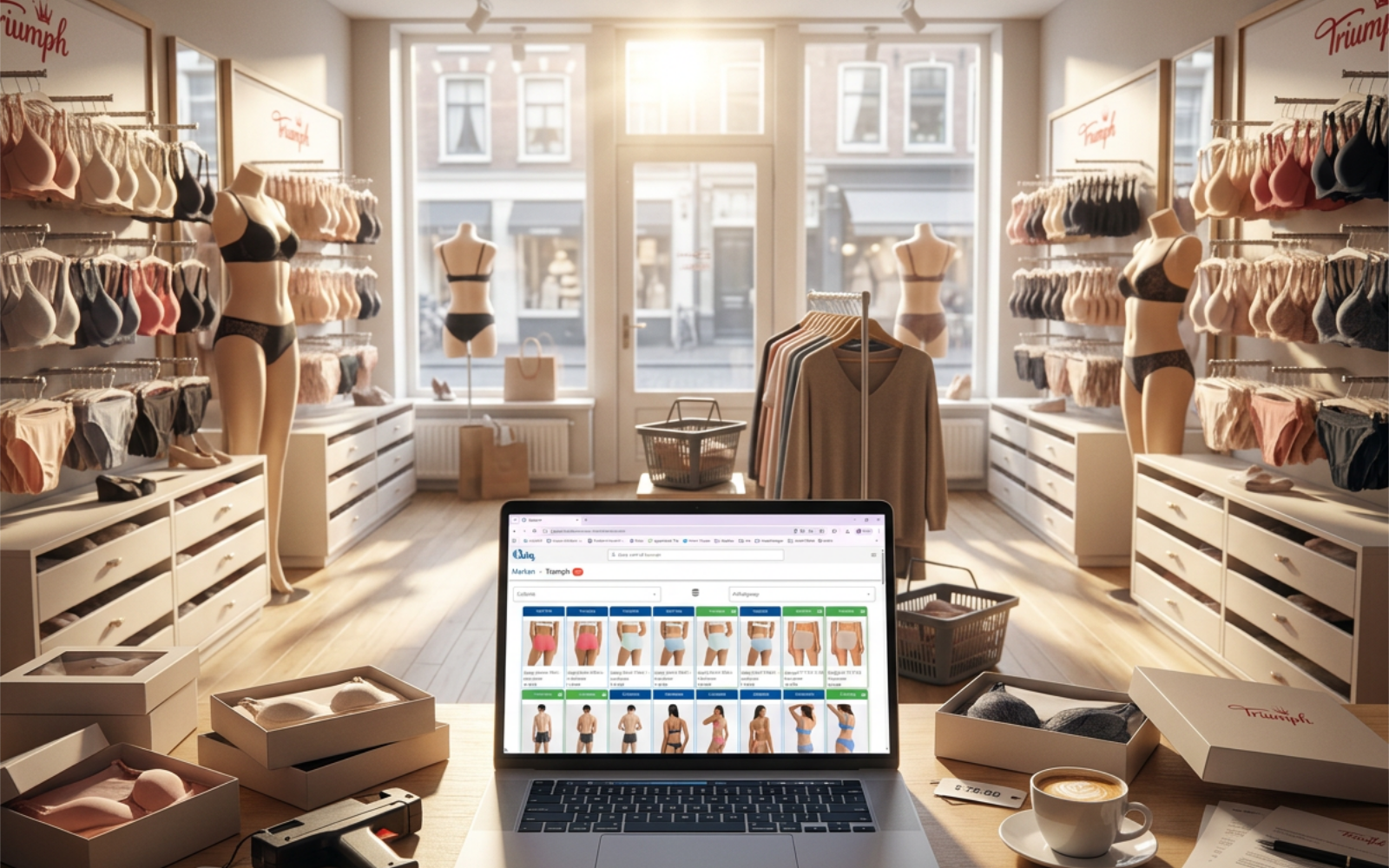
A story about retail product data remains abstract until you see which brands are actually available. That is why the brand pages are an important part of Latest Collection.
Via the brand overview can you check which fashion brands are on the platform and what information is available per brand. For retailers, this changes the question. Not just: how does a POS integration work? But above all: which brands that I sell are already available?
When a large part of the product range is already present in the data layer, it immediately becomes clear what item data can mean for retail in practice. Less building. Less searching. More checking and directly moving on.
To view all brands immediately, you can create a free account directly on the platform. latestcollection.fashion.
How Latest Collection makes article data available for retail.
Latest Collection does not replace a cash register system, webshop, or EDI platform. The platform forms the data layer in between.
Brands supply article information. This information is structured so that affiliated software partners can work with it. Subsequently, the same product data can be made available within various retail environments. As a result, not every party has to recreate the same basics.
Ultimately, that is the essence of good article data for retail: organizing information correctly once and then making it available wherever it is needed.
The real profit is made before the point of sale.
A faster checkout is nice. A better integration too. But the greatest gain comes when a retailer no longer has to perform certain tasks at all.
Don't retype a product name if it's already available. Don't manually add a barcode if it's already linked to the item. Don't search for a product image if it's already part of the collection.
Therefore, article data for retail is not an isolated IT topic. It determines how much work is required between the moment a collection arrives and the moment that collection can be sold. And that is precisely where fashion data, EDI, and POS integrations come together.
Not to add yet another system, but to make existing systems work better with information that is already available.
Built for Fashion. Designed for You.