“Data is the new gold.” You’ve probably heard that statement quite often. But if you work in fashion on a daily basis, you know that data by itself isn’t worth anything at all. An Excel file that no one can read properly. A barcode that’s missing. Product images that are delivered separately from the article details. Sales information that isn’t linked to the same article structure. There can be an enormous amount of data present and yet everyone still has to manually correct it.
The true value of data in fashion retail therefore does not arise from owning it. Value arises when reliable information is usable at the right time for the people and systems that need to work with it. For the brand that delivers its collection. For the retailer that needs to make items ready for sale. For the checkout provider that brings data to the store floor. And ultimately for the entrepreneur who makes decisions based on that information.
Data is not a gold reserve. It is infrastructure.
Fashion revolves around movement. New collections, new seasons, new prices, new stock and constantly changing sales channels. In such a market, you have little use for information that remains in different places in different formats.
You might already notice this. The brand has the information. The retailer has some of it. The checkout system expects a different structure. The webshop lacks an image. And ultimately, someone is still trying to complete the puzzle manually. Then data is not a competitive advantage. It’s work.
Therefore, you can better view data in fashion retail as infrastructure. Just like logistics, good data ensures that something can be moved from A to B. Not a box of items, but information about an item.
You don't earn from data. You earn from what makes good data possible..
The statement “data = money” is therefore actually too simplistic. Data only yields economic value when it improves the process in some way.
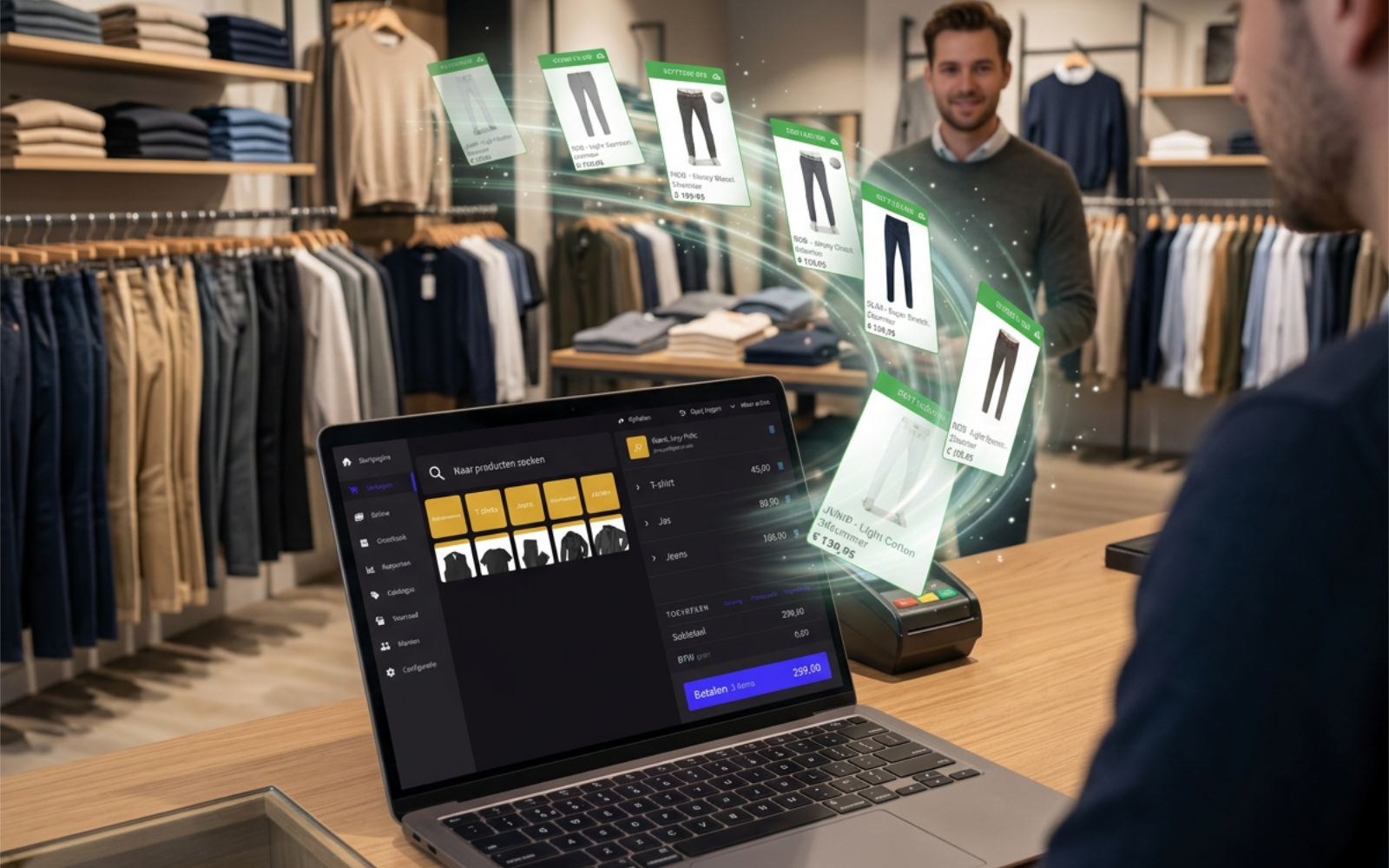
When a retailer no longer has to enter less article information manually. When a brand no longer has to compile different files for different customers as often. When a checkout provider no longer has to translate the same product structure for every connection. That’s where value is created. Not in the data file itself, but in fewer actions, fewer corrections and more readily available information. Good data in fashion retail can therefore contribute to:
- less manual article input;
- more reliable article information;
- a better connection between the checkout and the webshop;
- faster available collections;
- less corrective work for brands, retailers and software partners;
- better information for reporting and decision-making.
The value starts with usable product data.
Before you can send data, the basics need to be in place. That starts with the article itself. What is the article number? What EAN code is included? What sizes and colors are available? What is the price? What season does the product belong to? And which product image goes with which variant? Those product data It may seem operational, but everything that happens afterwards builds on that.
A cash register system can only reliably process what it receives. A webshop can only display what is available. And a reporting system can only analyze what has been properly recorded. Therefore, data quality is not a detail at the beginning of the chain. It works all the way to the end.
As a retailer, you feel bad data immediately on the store floor.
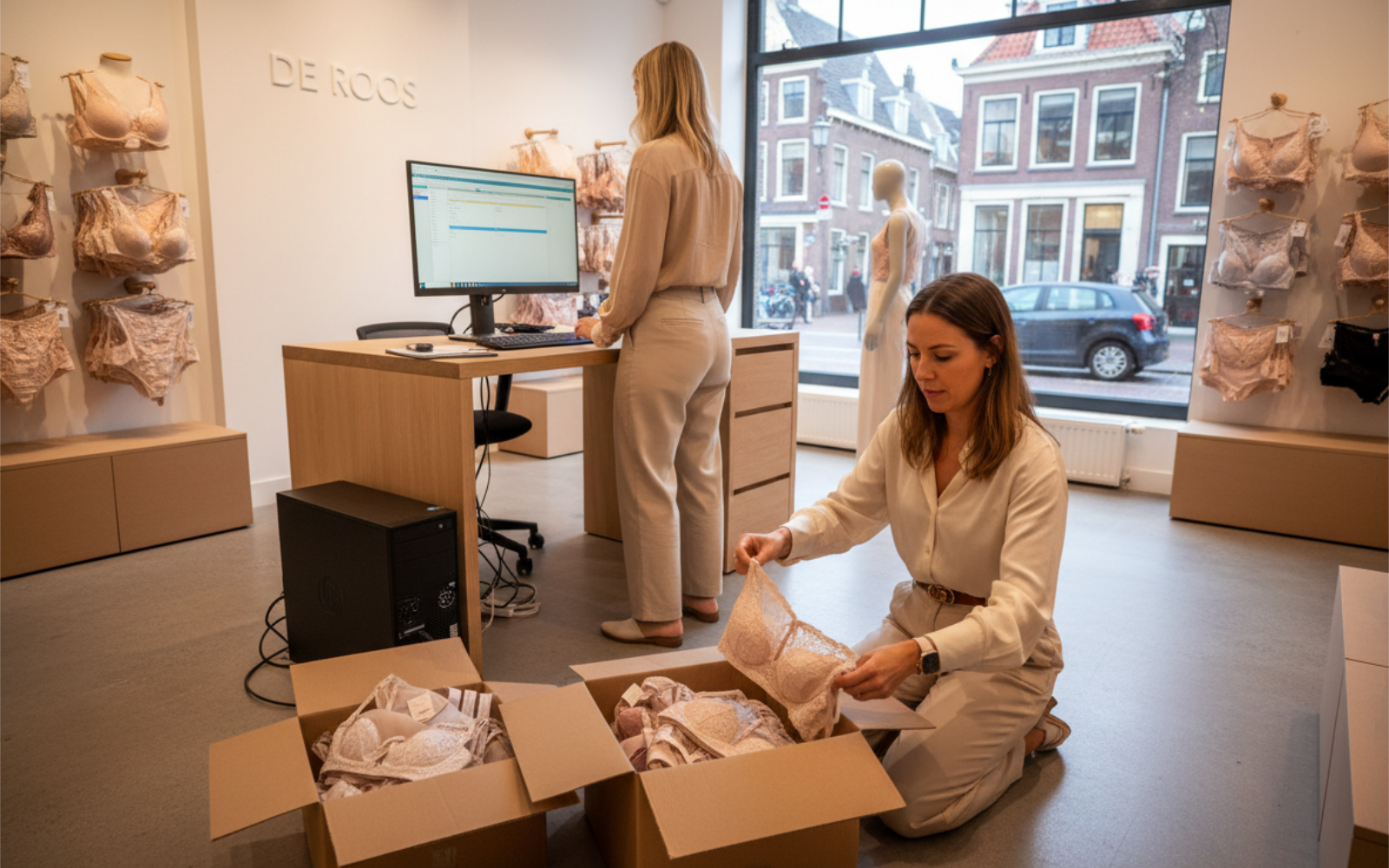
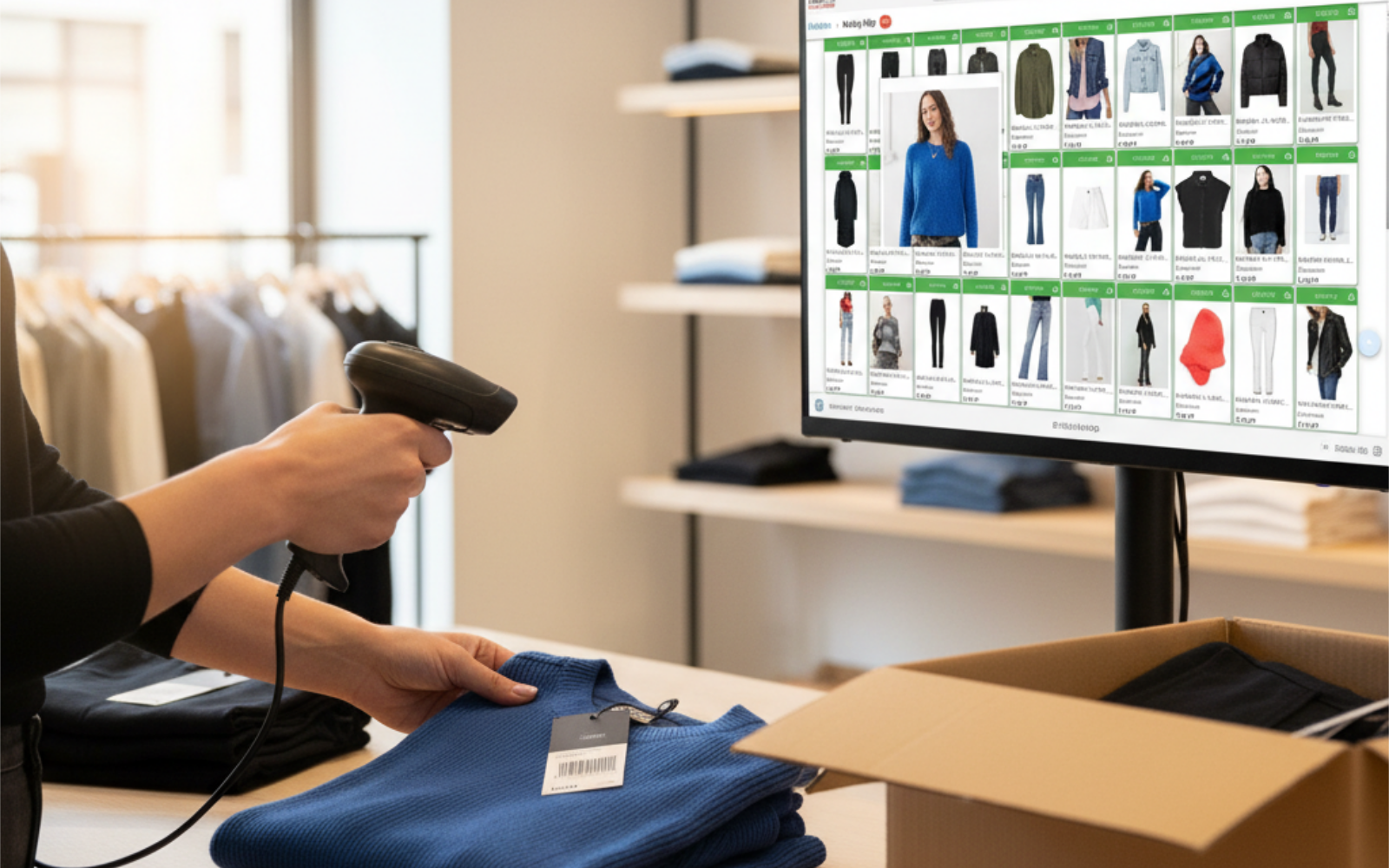
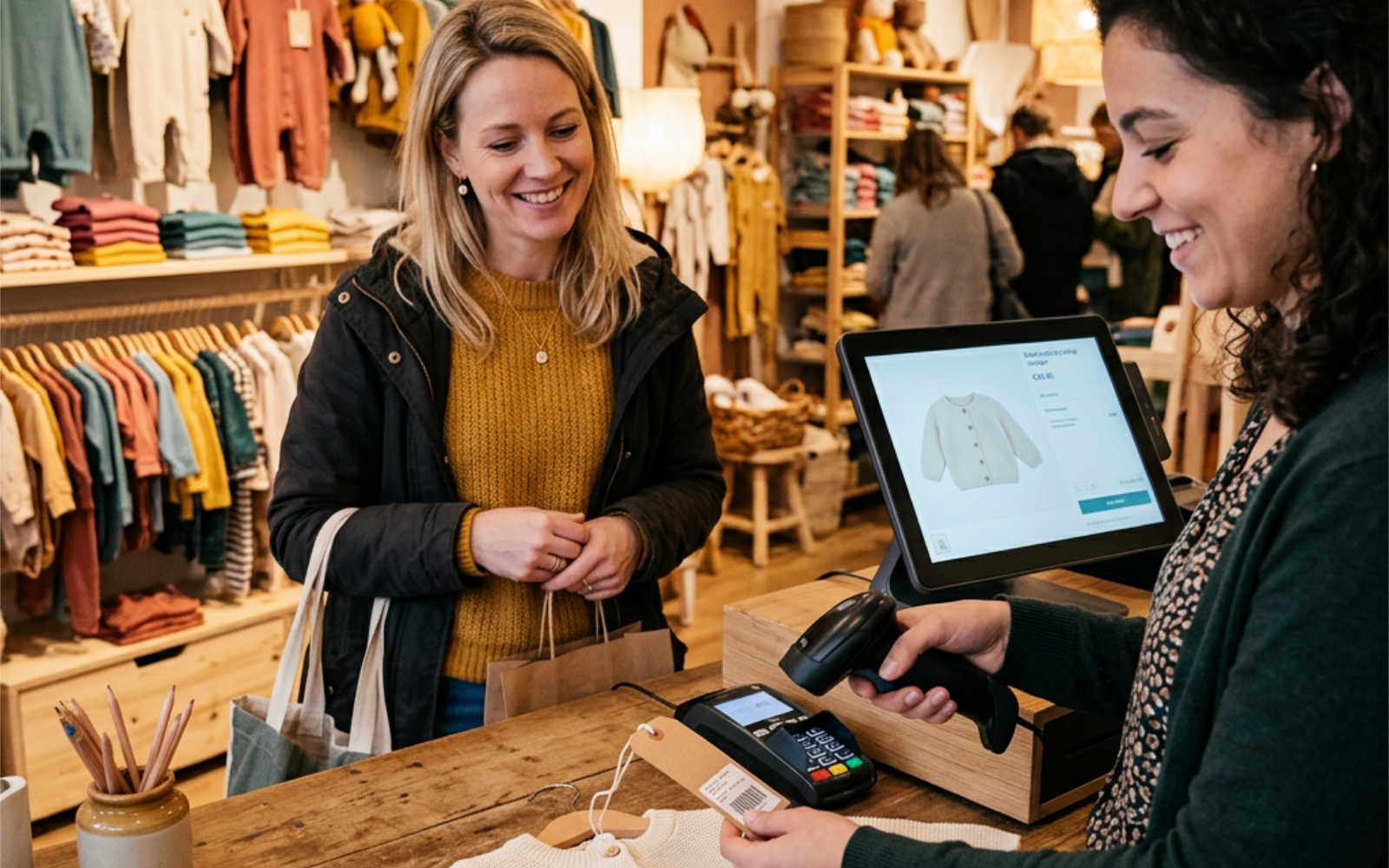
If you are a retailer, you will probably notice the problem the fastest. A new delivery arrives, but the items are not yet correctly listed in the system. Your employee has to check a barcode, adjust a color, search for a photo, and enter a price. None of these actions seem like a big deal. But with hundreds or thousands of items, it becomes a structural task.
When reliable product data is already available, the starting point changes. Your team doesn’t have to build information that already exists from scratch. And that’s exactly where the financial value of data begins: in work that you no longer have to do.
As a brand, you don't want to start all over again for every retailer..
For a fashion brand, the same challenge looks different. One retailer requests an Excel file. Another requires a CSV file. Another wants separate images, and a larger customer expects a link. The more outlets you serve, the less scalable it becomes.
That is why the value for you lies not only in better visibility. It also lies in preventing the same collection from having to be prepared for a different recipient every time. A central, uniform product structure makes reuse possible. One good organization at first. Then make it available to various connected systems and retailers.
As a software partner, you don't want to have to solve the same source problems over and over again..
If you work for a cash management provider, reseller, ERP system provider, or other retail platform, you probably recognize another variation. The software works. The connection works. But the information that comes in is not always complete or uniform. For the retailer, it then seems as if the system is causing the problem. And so the support request ends up with you.
There is also economic value in better data. Any source error that is resolved before your system is not required to be corrected later by support, implementation, or the retailer itself. Good data in fashion retail therefore not only makes the retailer more efficient; it can make the entire chain more efficient.
Why delivering free at the beginning of the chain is important.
That is why we at Latest Collection follow a simple principle: Brands can provide their product data for free.
There is a deliberate thought behind this. The lower the threshold for making good data available, the greater the chance that more brands will participate and more information will become available to connected parties.
The brand does not need to purchase an additional license to provide information. Latest Collection structures the received article data so that connected software partners can work with it.
In this way, we try to attach value not at the beginning of the chain, but to make the information useful further down the chain.
Reliability is ultimately more valuable than quantity.
More data doesn’t automatically mean better. If you receive ten additional fields but don’t know if the EAN code is correct, you still have a problem. For entrepreneurs, buyers, merchandisers and managers, therefore, it’s not about having as much information as possible. It’s about information that you can trust.
A report only becomes valuable when you know that the raw data is correct. A stock decision is only useful when items are consistently recorded. Automation only works well when exceptions do not have to be constantly manually corrected.
That makes trust perhaps the most important economic characteristic of data in fashion retail.
From product data to insight.
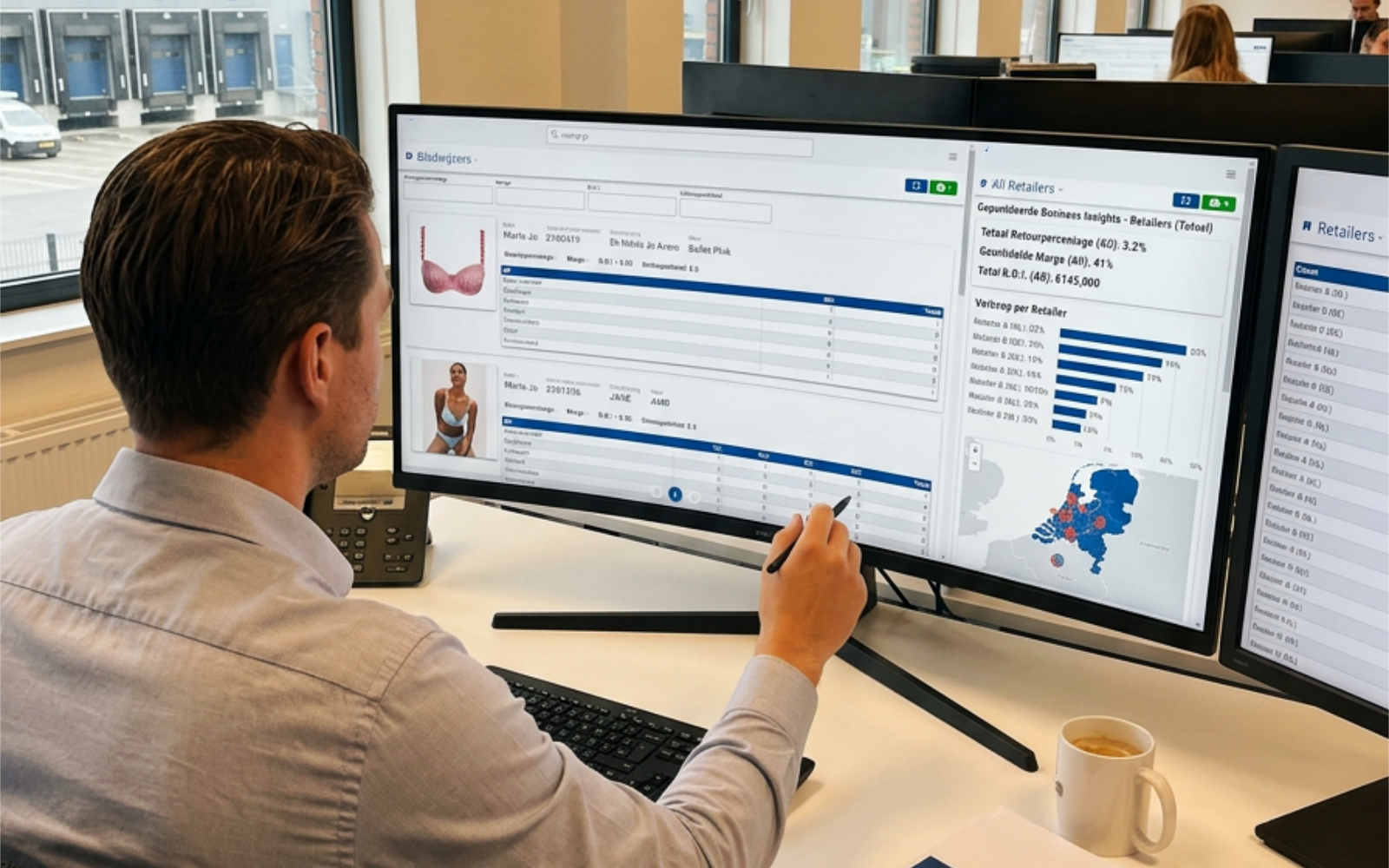
Then it really gets interesting. Product data tells you what an item is. Sales data tells you what happens to it. Inventory data tells you what is still available. And when that information can be logically connected, a new insight is created. data and insight which you can actually control.
Which brands perform well? Which sizes are moving fast? Which colors remain popular? Where is the inventory that requires attention? This transforms data from registration to decision-making information. And it is precisely at this point that data becomes commercially valuable.
Data-driven does not mean that humans will disappear.
A data-driven fashion industry does not mean that algorithms will take over every decision in the future. Not at all. The buyer knows their customer. The retailer knows their store. The merchandiser understands the collection. The entrepreneur feels the market.
Data does not replace that knowledge. Good data provides those people with better information to combine with their own experience. So you do not necessarily need more numbers. You need information that is accurate, useful, and helps you make a better decision faster.
How Latest Collection data can be used by the chain.
Latest Collection richt zich op de productdatalaag tussen fashionmerken, retailers en aangesloten softwaresystemen.
Merken kunnen hun artikelinformatie gratis aanleveren, bijvoorbeeld artikelgegevens, EAN-codes, maten, kleuren, prijzen en beschikbare productbeelden. Die informatie wordt centraal gestructureerd zodat aangesloten softwarepartners ermee kunnen werken. Daarmee hoeft dezelfde productinformatie niet op iedere plek opnieuw vanaf nul te worden opgebouwd wanneer ze al beschikbaar is.
Ben je een merk en wil je productdata beschikbaar maken? Bekijk dan hoe je data gratis kunt aanleveren.
Wil je als retailer of softwarepartner zien welke merken al in het platform staan? Bekijk het brand overview of maak een gratis account aan op latestcollection.fashion.
Data = geld, maar alleen wanneer de data werkt.
Dat is uiteindelijk de kern.
Data krijgt geen waarde doordat ze ergens in een database staat. Ze krijgt waarde wanneer een retailer minder hoeft in te voeren. Wanneer een merk dezelfde informatie kan hergebruiken. Wanneer een kassasysteem betrouwbare broninformatie ontvangt. En wanneer een ondernemer betere beslissingen kan nemen.
Daarom is goede data in fashionretail geen luxe en geen losse add-on. Het is infrastructuur. En hoe beter die infrastructuur werkt, hoe meer ruimte er ontstaat voor de partijen in de keten om te doen waar zij daadwerkelijk waarde toevoegen. Data = geld. Maar pas wanneer de informatie bruikbaar wordt.
Built for Fashion. Designed for You.