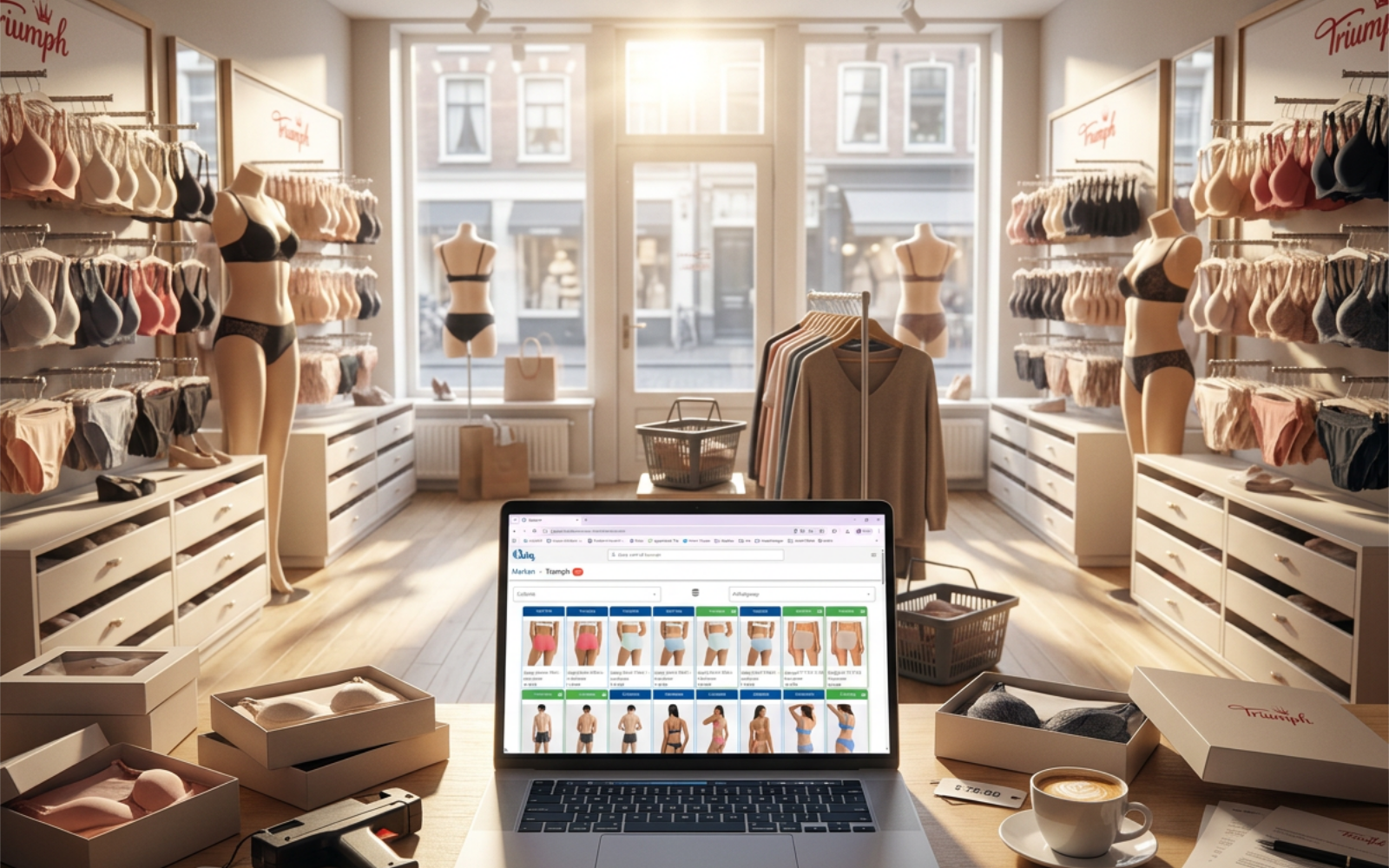
A brand may have a strong collection, launch a memorable campaign, and invest in photography, showrooms, and social media content. But ultimately, retailers and consumers only see what actually ends up in the systems.
And that is exactly why product data is becoming increasingly important for brands.
The retailer displays what the point-of-sale system or online store recognizes. The system can only function based on the information provided. If an image is missing, a color is incorrect, or a sizing chart is unclear, your collection will be presented differently than you, as a brand, intended.
As a result, brand visibility doesn't start with marketing. It begins much earlier: with comprehensive, consistent, and useful product information.
Why product data for brands is becoming part of brand presentation.
A consumer doesn't see an Excel file, data model, or integration in an online store. They see a product name, color, size, price, and product image.
But all that information started out as data somewhere.
That makes product data for brands much more than just a technical file sent to a retailer. It’s the digital representation of your collection. The more complete and consistent that representation is, the greater the chance that your brand will actually be displayed the way you intended.
When retailers have to combine different files, fill in data themselves, or collect product images separately, there is room for discrepancies. And every discrepancy can ultimately become visible on the sales floor or online.

Where brand visibility is lost without anyone noticing.
A collection can be visually perfect and still appear incorrectly on the retailer's screen.
Think of a color listed under a different name, a missing photo, sizes that are misinterpreted, an incorrect price, duplicate items, or an item that isn't scanned at all.
For the brand, this might seem like a minor data issue. For the retailer, it’s extra work. And for the consumer, it’s simply how your brand is presented.
That is precisely why high-quality product data is directly linked to brand consistency for brands. Not because data replaces a campaign, but because a campaign can only reach its full potential when the underlying information is accurate.
Why standardized product data is becoming the new foundation for fashion brands.
Many brands still supply different retailers in different ways. One retailer receives an Excel file, another a CSV file, yet another uses an API, and product images are sometimes shared separately via folders or downloads.
That may seem flexible, but it also means that the same collection is processed again in multiple locations.
Consistent product data brings structure to this process. Product information is submitted once in its entirety and then made available in a consistent manner. For brand product data, this means fewer variants, fewer separate files, and less chance that retailers will have to interpret the same information in their own ways.
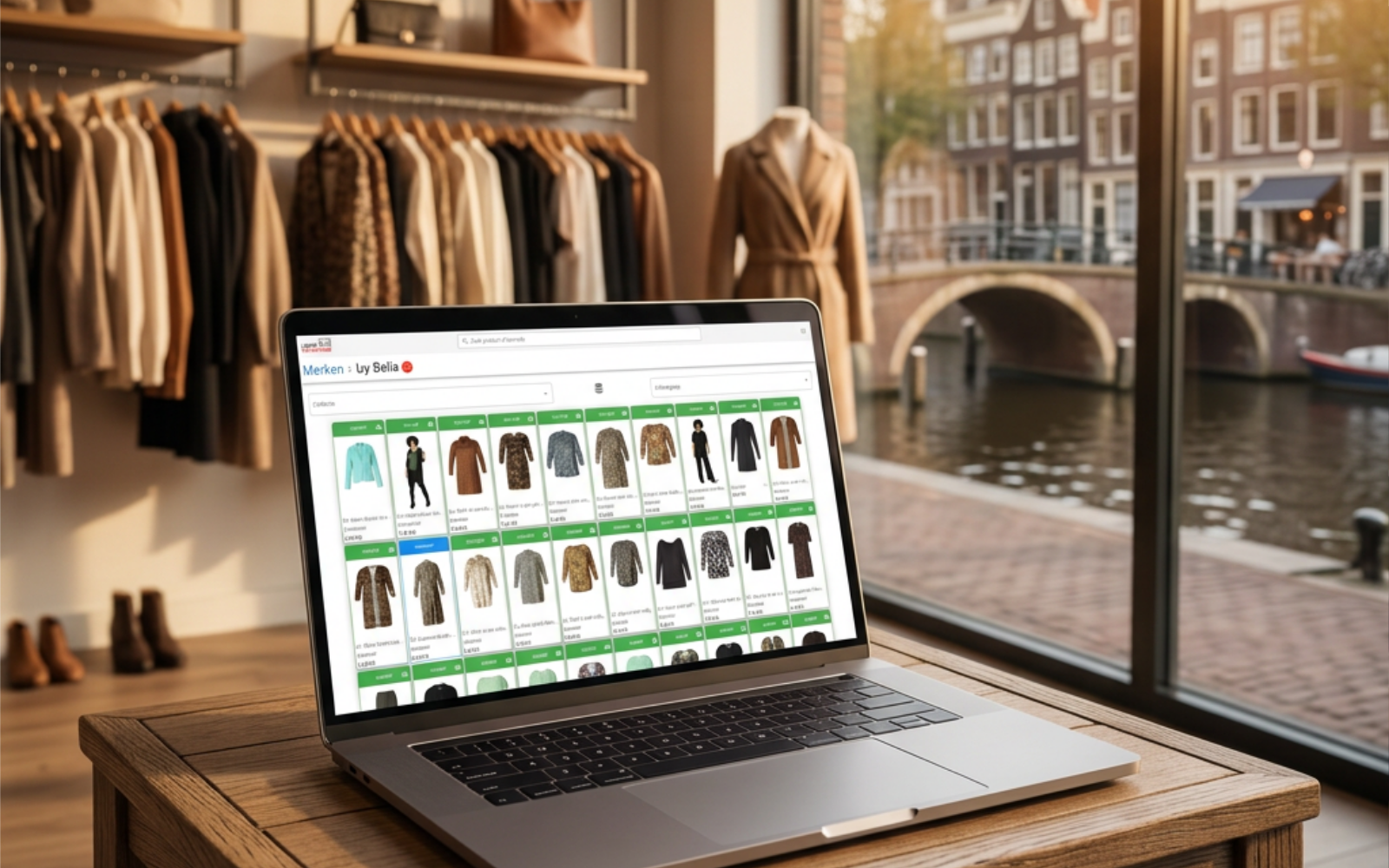
Submit once instead of over and over again.
The most interesting aspect isn't just standardization. It's scalability.
When a brand has to prepare data anew for each retailer, the operational workload grows along with the number of retail locations and systems. That is exactly where centralized product data makes a difference for brands.
Instead of constantly adapting the same collection for different recipients, a single, reliable source is created that affiliated parties can use. This ensures peace of mind on the back end and consistency on the front end.
How good product data can benefit your brand identity.
Brand identity isn't just about a logo, a campaign, or visual language. It's also in the details.
The right product name. The correct color. A clear size range. A good product photo. A price that’s right. An item that’s available on time. When that information is displayed consistently across the board, it creates brand recognition. When the same collection is presented differently in different places, it creates confusion.
That is why product data for brands is increasingly becoming an integral part of professional brand management. It is not visible as a technical element, but it is evident in the end result.
Product images are no longer a separate component.
Visual material deserves a special place in this context.
An article without a good product image is simply less complete online. But here, too, fragmentation often occurs. Product data is stored in one file, images in another location, and links between the two then have to be reestablished.
In a well-developed data structure, product images and product information belong together. The image should correspond to the correct product, the correct color, and the correct season.
That is why, within Brands & Visuals , we do not treat product images as standalone marketing assets, but as part of the information that makes a product ready for sale.

Why product data is also commercially valuable for brands.
Above all, a retailer wants new items to be available quickly and accurately. The less manual work this requires, the easier it is for a brand to integrate into day-to-day operations. This may seem like an operational detail, but it does indeed influence the relationship between the brand and the retailer.
Brands that consistently provide complete information are easier to process. New collections can be made available more quickly. There are fewer questions about missing data, and fewer corrections are needed.
High-quality product data for brands therefore doesn't just improve collaboration from a technical standpoint. It also makes a brand more pleasant to work with.
Data quality begins before information reaches the retailer.
Many problems don't become apparent until the end of the supply chain. For example, when a store employee can't find an item or when a product is listed incorrectly in the online store. But the cause often lies much earlier in the process.
A missing field. An incorrect format. An incorrect link between an item and an image. The sooner data quality is checked and standardized, the less corrective work will be needed later.
That’s why, for brands, good product data isn’t just about providing more information. It’s primarily about information that is complete, logical, and usable by the systems that need to work with it.
How Latest Collection makes product data scalable for brands.
Latest Collection brings together product information and images from fashion brands on a single, centralized data platform.
Brands can submit their data for free. We process and structure that information so that affiliated retailers and software systems can use it. This means that a brand doesn’t have to rebuild the same foundation from scratch for every retailer.
This establishes a single, clear process for brand product data: centralized submission, structuring, and then making the data available to the supply chain. The brand maintains its focus on the collection, positioning, and brand experience. The data ensures that this brand experience is accurately reflected in the systems retailers use on a daily basis.
A recognizable brand starts with a strong foundation.
Marketing remains important. Photography remains important. A strong collection remains important. But all those investments only realize their full value when the product information behind them is accurate. Because ultimately, consumers only see what a retailer can show them. And what a retailer can show them starts with what a brand provides.
That means product data isn't just a technical byproduct of a collection for brands. It's part of how your brand is seen.
Built for Fashion. Designed for You.