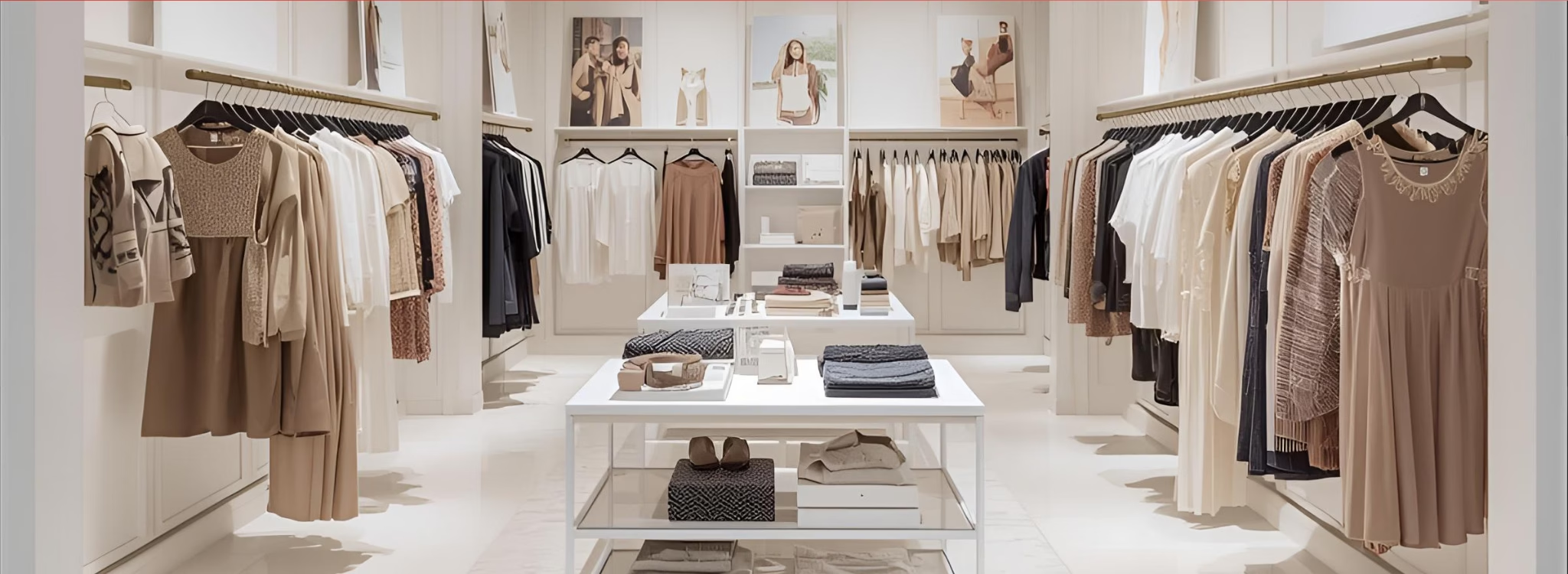
How the fashion data platform works.
Fashion retail operates at speed. New collections, changing seasons, and numerous size and color variations demand immediate availability in the system where the product is being processed. Yet, the supply chain is often hampered by something fundamental: fashion product data that doesn't automatically feed into the retail software.
Latest Collection solves this structurally. Not by replacing systems, but by connecting them.
The structural problem in the fashion chain.
In theory, the chain is logically structured:
✓ Brands create collections and have access to fashion product data.
✓ Software partners provide retail solutions.
✓ Retailers use these systems daily.
In practice, one crucial link is missing. Fashion product data doesn't flow uniformly to the point of sale.
Brands deliver diverse files to retailers. Retailers manually process these in their systems. This takes time, increases the risk of errors, and delays implementations. It's not the software that's failing; it's the data that's missing from the right place.

Latest Collection as a connecting data layer.
Latest Collection acts as a neutral data layer between brands and retail software. The platform: collects fashion product data from brands, verifies and structures this data, and makes uniform data available to connected systems.
✓ Brands submit their data correctly once.
✓ Software partners connect to the platform once.
✓ Retailers work with complete articles and product images in their existing system.
This eliminates manual data entry and creates scalability.
The structural problem in the fashion chain.
The process is tailored to the fashion industry's practices. Latest Collection facilitates distribution without claiming ownership.
1. Brand Submission
Brands submit fashion article data and product images via Excel, CSV, or a technical integration from their PIM or ERP system.
2. Standardization
Latest Collection verifies, enriches, and structures the data according to fashion-specific logic, such as sizes, colors, variants, and seasons.
3. Software Partner Integration
Affiliated partners automatically make the uniform fashion article data available in their cash register system, webshop, or platform. Such as our partner Retail2Market.
4. In-Store Use
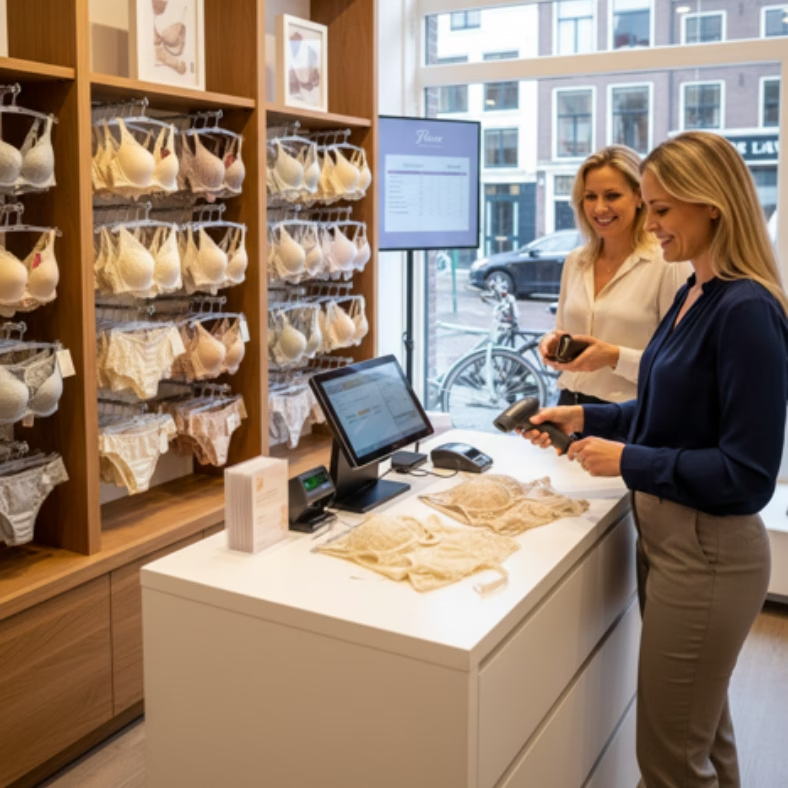
Retailers retrieve complete items by scanning a barcode. No complex files. No double entry.
What this means for brands.
Product data will no longer be a recurring burden. No separate files for each retailer. No customization for each system.
A single centralized delivery means visibility across multiple connected solutions simultaneously.
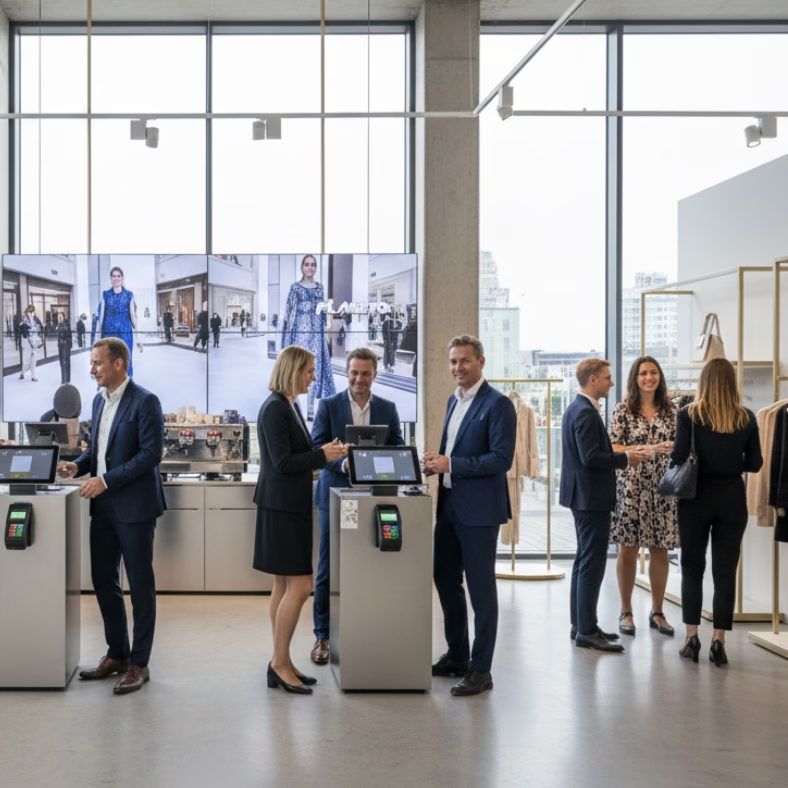
What this means for software partners.
Uniform fashion data strengthens the retail solution.
Faster onboarding. Less manual data entry for retailers. A stronger proposition in fashion retail.
By connecting to the platform once, scalable integration with multiple brands is created.
What this means for retailers.
New collections are live faster. Items are complete and consistent. Manual data entry is largely eliminated.
Retailers benefit from a data stream that finally cooperates through their software provider.
Part of a growing ecosystem.
Latest Collection collaborates with brands, software partners, and platforms in fashion, footwear, sports, and lingerie. The platform deliberately remains neutral. It doesn't replace anything or compete with others. It connects. It's precisely this independence that makes scalable collaborations possible.
From insight to action.
Understanding how fashion product data flows through the supply chain reveals where gains can be made. The next step is to explore what connecting means for your role.