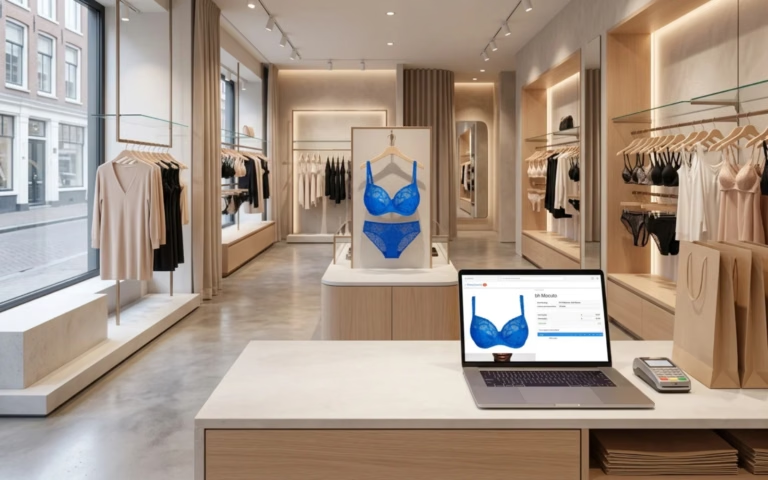
You might be familiar with this scenario. The new collection is ready, but now comes the next step. One retailer requests an Excel file. Another party wants different columns. Product images are stored somewhere else. A price has already been adjusted, but not every file contains all those changes. Before you know it, there are multiple versions of the same collection. That’s exactly where product data management in fashion gets complicated.
Not because you as a brand don’t have product information, but because that information is used in different places, in different formats, and for different recipients. The larger your collection and distribution become, the more difficult it becomes to maintain manual control over it.
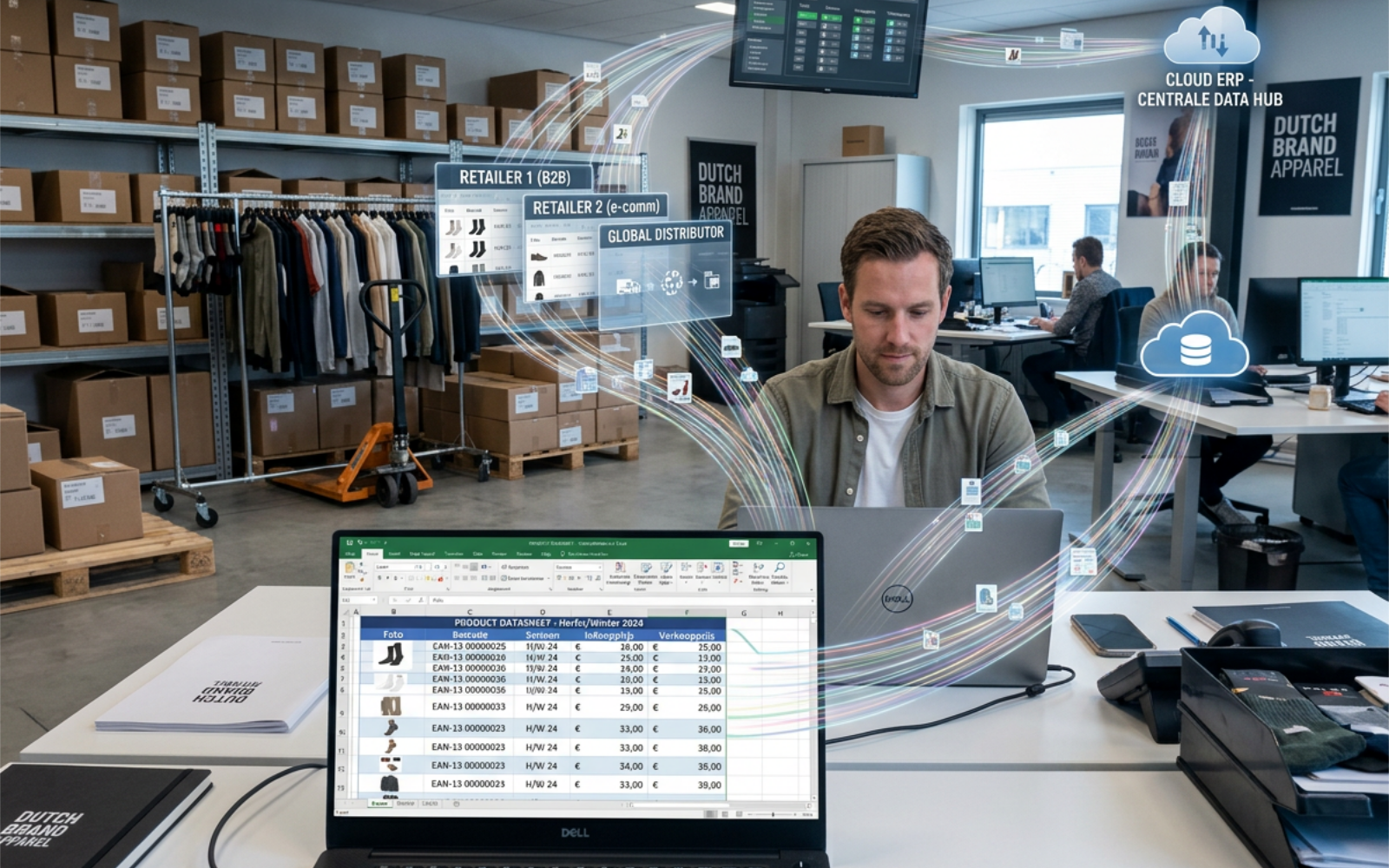
Where product management usually starts to become complex.
At first, a spreadsheet is often fine. You have an article number, description, color, size, price, and barcode. There may also be a folder with product photos. But once the same collection has to be sold to multiple retailers, systems, and sales channels, the situation changes.
One retailer uses different field names. A cash register system expects a fixed structure. A webshop needs additional information. A price changes and needs to be updated in multiple places. This quickly leads to the question: Which version is actually the authoritative one?
That is one of the most important challenges in product data management in fashion. Not collecting even more information, but ensuring that everyone works with the correct version.
The small differences often cost the most time..
A mistake doesn’t have to be big to be annoying. A wrong EAN code. A color that is described differently. A missing size. A product image that is not linked to the correct variant. For you as a brand, this may mean an additional question from a retailer. For the retailer, it means searching, checking, and correcting. And when the same mistake occurs at multiple points of sale, one small problem is suddenly solved several times.
That is why good is data quality Much more than an administrative issue. It determines how much additional work is generated further down the chain.
From multiple files to a single clear source.
The logical next step is centralization. That doesn’t mean that everyone has to use exactly the same system. It means that there is a single clear source where product information is collected and structured.
Think of:
- article numbers and article descriptions;
- EAN codes and barcodes;
- sizes and size structures;
- colors and color codes;
- prices;
- collection and seasonal information;
- available product images.
From that central structure, the information can then be made available to the parties and systems that need to work with it. This makes product data management in fashion much more scalable than if each recipient receives their own separate file.

What changes for you as a fashion brand??
As a brand, you probably don’t want an extra data system to replace the existing one. You want to spend less time re-entering the same information over and over again. When you centralize your product data, you don’t have to start from scratch every time you receive a new request. A retailer requests product information? That information already exists.
A software partner needs EAN codes, sizes, and colors? Those don't need to be collected from different files again. If a product image needs to be linked to an item, a fixed article structure helps maintain that relationship.
That gives you fewer versions to manage and more control over what is being distributed on behalf of your brand.
Your brand presentation starts earlier than with marketing.
As a brand, you invest a lot in the appearance. Photography, campaign images, copy, collection presentation and branding are carefully developed. But ultimately, a consumer often sees your product through the systems of a retailer. Then, not only the campaign matters. The right product name, color, size, price and image also determine how your item is presented. Therefore, it is essential to have a clear brand identity. brand data and product images in the same process.
Good product management therefore not only helps your internal organization. It also helps to keep your brand presentation more consistent throughout the chain.
What does the retailer notice about better product data management??
Look at it from the other side. A retailer receives your new collection. When the item information is complete and available in a usable structure, the store team doesn’t have to search for or re-enter it themselves. That can make the difference between:
- rebuilding an article or just checking it;
- searching for a product image or linking it directly to the item;
- manually adding a barcode or having it already available;
- differences are restored or worked from the same source information.
For you as a brand, this is important because a collection that can be handled more easily also causes fewer questions and corrections.
Excel is not the problem.
Excel often gets blamed for fragmented product data management. But Excel itself is not the problem. The problem arises when there are ten spreadsheets with different versions of the same truth. An Excel file can be a great way to deliver product information. Just like CSV, an API or another technical link can be that. The most important thing is what happens to the data afterwards.
Is that information centrally controlled and structured? Or does each recipient have to interpret for themselves which column belongs to which field? That is where the difference lies between managing individual files and professionally managing product data.
When do you know that your current process is no longer scalable??
You don't need to be a large international brand before central product management becomes interesting. Pay attention to these signs:
- you send the same collection in multiple file formats;
- Retailers regularly request missing item information;
- No one knows immediately which version of a product file is the latest;
- product images are managed independently of the article data;
- price or article changes must be updated in multiple places;
- Several employees maintain a part of the same product information each.
Do you recognize several points? Then the next efficiency improvement probably lies not in working even faster, but in better organizing.
From product data to insight.
A reliable product structure also has a second benefit. You can more easily link it to other data. Product data tells you what an item is. Sales data can then tell you what happens with it. When these worlds connect well, information is created that allows you to proceed with further analysis. For example, which items, colors, or sizes are doing well and where differences arise between retailers or regions.
Dat is waar data and insight verder gaan dan alleen administratie. Maar ook daar geldt dezelfde regel: betrouwbare inzichten beginnen bij betrouwbare brondata.
Hoe Latest Collection van losse productdata één structuur maakt.
Latest Collection vormt een centrale productdatalaag voor fashionmerken, retailers en aangesloten softwarepartners. Als merk kun je artikelinformatie centraal aanleveren, bijvoorbeeld via Excel, CSV of een andere ondersteunde methode. Die informatie wordt vervolgens gestructureerd zodat aangesloten systemen ermee kunnen werken.
Het uitgangspunt is eenvoudig: informatie die bij de bron al bestaat, hoeft verderop in de keten niet steeds opnieuw vanaf nul te worden opgebouwd. Dat geeft jou meer overzicht over je productdata en helpt retailers en softwarepartners om met een consistentere basis te werken.
Wil je zien hoe dat werkt? Bekijk dan hoe Latest Collection productdata verwerkt of maak een gratis account aan op latestcollection.fahion.
Van chaos naar controle begint met één vraag.
Je hoeft je hele dataproces niet morgen opnieuw te bouwen. Begin met één simpele vraag:
Als vandaag een retailer om onze complete collectiegegevens vraagt, weten we dan precies uit welke bron die informatie moet komen?
Is het antwoord meteen duidelijk? Dan heb je waarschijnlijk al een sterke basis met productdatabeheer. Moeten er eerst drie bestanden, twee mappen en een collega worden geraadpleegd? Dan weet je waar de winst zit. Goed productdatabeheer in fashion gaat uiteindelijk niet om zoveel mogelijk techniek. Het gaat om overzicht.
Weten welke informatie klopt. Weten waar die staat. En ervoor zorgen dat de partijen die ermee moeten werken dezelfde betrouwbare basis kunnen gebruiken. Dat is de stap van chaos naar controle.
Built for Fashion. Designed for You.