
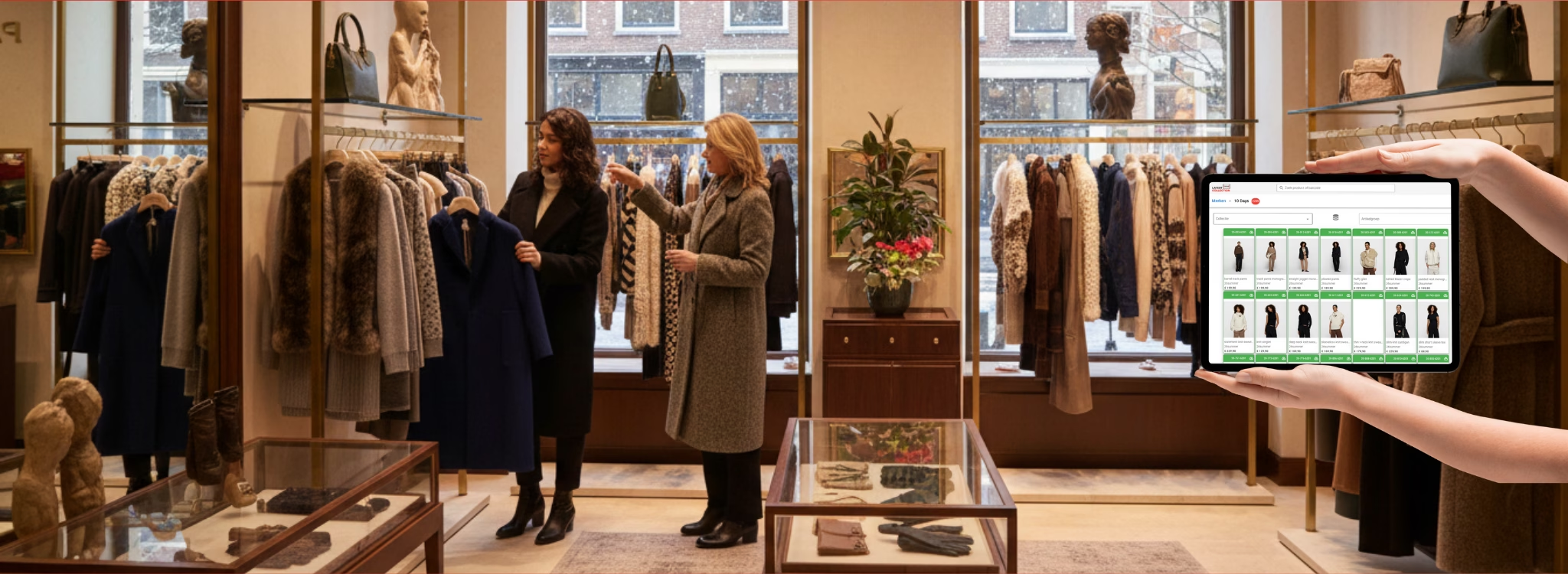
Product data management in the fashion industry.
Product data management in the fashion industry is more complex than it first appears. Items don't consist of a single product, but of variants, sizes, colors, seasons, and collections. Yet, many systems are still set up as if fashion were simply "product data." That's where things go wrong.
Why product data management in fashion is different.
In fashion, everything revolves around variety. One style has multiple sizes and colors. Collections change rapidly. Items come and go with the season, while basic items last for years.
Generic product data management struggles to handle this. Data is recorded twice, variants become disconnected, and changes have to be implemented manually. The more systems are added, the greater the risk of errors.
Without properly designed product data management, fragmentation arises. And that ultimately ends up at the checkout.
The role of article data in product data management.
Product data management in fashion revolves around item data. Not just names and prices, but about structure. Sizes, colors, size charts, collections, seasons, barcodes, and additional features must all be consistent. If this consistency is lacking, product data management becomes a source of frustration instead of a tool.
It is therefore essential that article data is managed centrally and uniformly before it is passed on to other systems.
Latest Collection as a central layer for product data management.
Latest Collection doesn't replace existing systems, but rather acts as a connecting layer. The platform collects fashion product data from brands, structures it according to fashion logic, and makes the data available to POS systems and other platforms.
- Brands deliver their product data correctly once.
- Latest Collection garantiza uniformidad y consistencia.
- Connected systems receive the same, correct article information.
In this way, interpretation disappears from the chain and one truth is created.
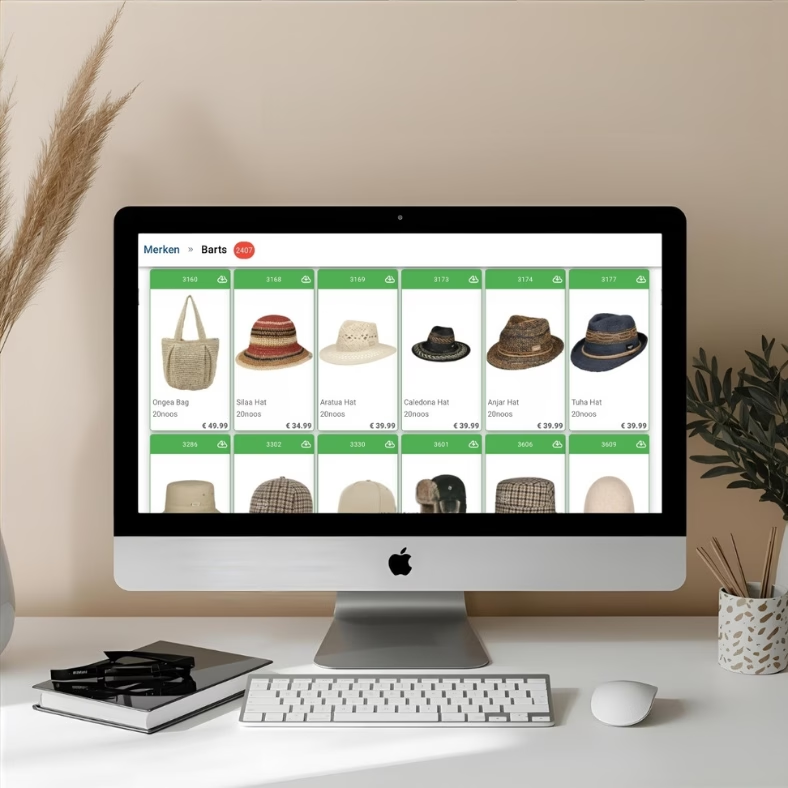
What good product data management delivers for brands.
For fashion brands, good product data management means peace of mind. No separate files per buyer, no different formats per system, and no endless rounds of corrections.
By centrally managing product data through Latest Collection, brands can easily scale their data to multiple retailers and POS systems simultaneously.
What it means for POS systems and POS.
For POS suppliers, good product data management isn't a technical aspect, but a sales requirement. Retailers expect fashion product data to be accurate at the POS. If this isn't the case, your system becomes the bottleneck, even if the cause lies elsewhere.
With fashion-specific product data via Latest Collection, you seamlessly integrate with fashion retail practices. You can deliver faster, accept quotes more often, and broaden your proposition without customization or additional maintenance.

From product data management to better retail processes.
When product data management is well-organized, everything behind it works better. New collections are available faster. Items are sold and reported correctly. Retailers need fewer manual corrections. Good data upfront ensures reliable processes in the store and beyond.
Part of the fashion data ecosystem.
Product data management doesn't exist in isolation. It's a vital component of the broader fashion data ecosystem where brands, POS systems, and partners collaborate. Latest Collection connects product data management with distribution, EDI, and reporting, without adding complexity.
Read how fashion data works in the chain.
From insight to action.
Understanding why product data management is different in fashion reveals where gains can be made. For brands, POS suppliers, and retailers.